

This whitepaper serves as a comprehensive technical manual for the Aviator demo version, a risk-free simulation of the popular crash-style betting game. We will deconstruct its core mechanics, random number generation (RNG), underlying mathematical models, and strategic frameworks applicable to the demo environment. This guide is designed for analytical players seeking to understand the system before engaging with real-money aviator game online variants.
Before you start: This is a simulation. No real money is won or lost. The aviator demo perfectly mirrors the logic and volatility of the real game, making it an ideal laboratory for strategy testing. Ensure your browser is updated for optimal WebGL performance, and consider using a desktop for precise input during high-multiplier scenarios.
Accessing the Aviator Demo
Access is straightforward. Navigate to the official aviator game provider or portals like Aviator-game.mobi. The demo is typically loaded instantly without registration, using a virtual credit balance that refreshes on page reload. This instant access facilitates unlimited experimentation with the game’s engine.
Deconstructing the Game Engine: RNG & Multiplier Algorithm
The core of the aviator demo is a provably fair algorithm, often based on a cryptographic hash chain (e.g., using a client seed, server seed, and nonce). The multiplier curve is not random but predetermined at the moment of round initiation. The visual “takeoff” represents the reading of this pre-generated chain.
Mathematical Model of the Multiplier (x): The probability P(x) of a crash at a multiplier less than or equal to x is often defined by a function like: P(x) = 1 – (1 / (1 + (x / c)^k )), where c and k are parameters controlling the house edge and curve shape. For a common 1% house edge, the Return to Player (RTP) is 99%, meaning the expected value (EV) for a $1 bet is $0.99 in the long run.
Expected Value Calculation Example: Assume a simplified model where you auto-cash-out at 2.00x. If the probability of reaching 2.00x is, say, 40%, and you bet 1 credit:
EV = (Probability of Win * Profit) + (Probability of Loss * Loss)
EV = (0.40 * (2.00 – 1)) + (0.60 * (-1)) = (0.40 * 1) + (0.60 * -1) = 0.40 – 0.60 = -0.20 credits.
This negative EV is intrinsic and demonstrates the house edge. The aviator demo allows you to test such strategies against thousands of simulated rounds to validate their long-term outcome.
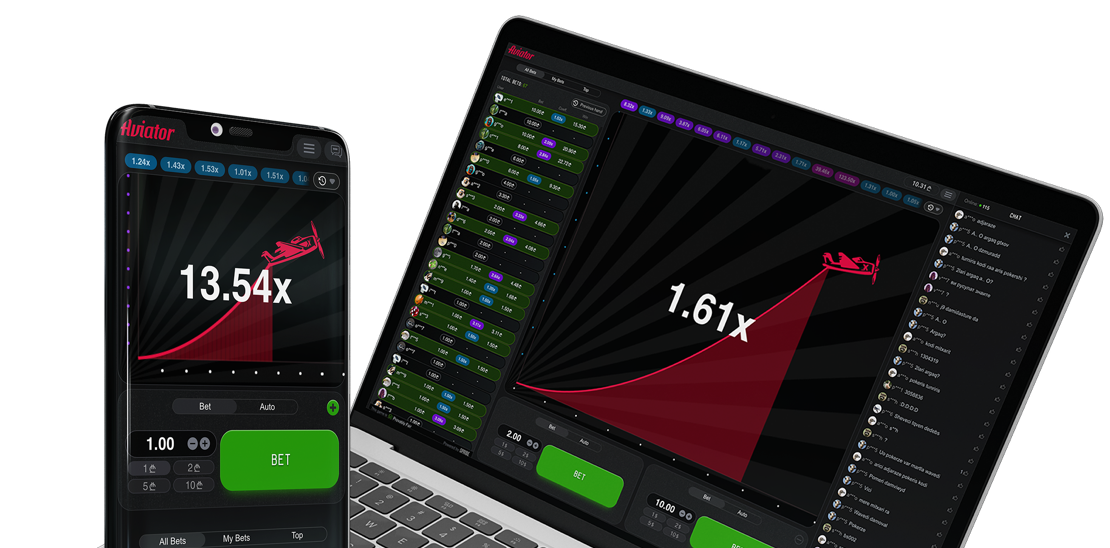
Interface & Betting Mechanics Breakdown
The interface presents a graph with an ascending line (the multiplier) and two primary betting panels.
| Element | Technical Function | Demo Utility |
|---|---|---|
| Multiplier Graph | Visual representation of the pre-generated hash chain outcome. | Study crash point distributions and volatility patterns. |
| Bet Placement Panel | Input for virtual stake amount. Does not affect RNG. | Test bet-sizing strategies and their impact on virtual bankroll cycles. |
| Auto Cash-Out Panel | Pre-programmed trigger to lock in profit at a set multiplier. | The critical tool for testing systematic strategies. Set and forget to collect data. |
| Round History | Log of recent crash multipliers (e.g., 1.21x, 4.87x, 1.05x). | Analyze for false patterns (Gambler’s Fallacy). The sequence is independent. |
Advanced Strategy Simulation in Demo Mode
The aviator demo is a strategy sandbox. Key methodologies to test include:
- Martingale Variants: Test double-after-loss progressions. The demo will quickly show how extended loss streaks decimate a virtual bankroll despite a high RTP, proving the strategy’s long-term risk.
- Fixed Fractional Betting: Always bet 5% of your current virtual balance. Demo testing showcases how this manages “drawdown” but leads to slow growth.
- Multi-Account Simulation: Mentally track several concurrent demo sessions with different auto cash-out points (e.g., 1.5x, 2.0x, 5.0x) to gather data on hit rates and variance.
Technical Troubleshooting & Data Analysis
Use the demo to diagnose issues and analyze performance.
- Scenario: “My auto cash-out didn’t trigger!” In the demo, this is impossible unless the button wasn’t confirmed. Replicate the exact input sequence to identify user error.
- Scenario: “The game feels ‘cold’.” Log 100 demo rounds. Calculate the mean crash point. You will likely find it aligns with the expected value, demonstrating normal volatility, not a “cold” algorithm.
- Connection Issues: The demo, like the real game, requires a stable connection. A disconnect during a round will usually result in a virtual loss if the crash occurred before reconnection, simulating real-world conditions.
Extended Technical FAQ
- Q: Is the Aviator demo algorithm identical to the real money version?
A: Reputable providers use the exact same RNG and game logic core. The demo is a skin over the live engine, providing perfectly accurate behavioral simulation. - Q: Can I reverse-engineer the RNG from the demo?
A: No. The seeds are cryptographically secure. You only see the output sequence, not the generating inputs, maintaining provable fairness. - Q: How is the house edge mathematically implemented in the curve?
A: The crash point distribution is skewed so that the integral of (multiplier * probability) across all possibilities equals the RTP (e.g., 0.99). A disproportionate number of crashes occur just above 1.00x to create this margin. - Q: What’s the most statistically robust auto cash-out point to test?
A: There isn’t one. The EV is always negative. Testing lower multipliers (e.g., 1.10x) will yield frequent, small virtual wins. Testing higher multipliers (e.g., 10.00x) yields rare, large virtual wins. The demo shows both converge to the same negative EV over time. - Q: Does the demo have a maximum virtual multiplier?
A: Yes, often capped at an extremely high value (e.g., 1,000,000x) for system stability, though the probability of reaching even 1000x is astronomically low. - Q: Can I use the demo to practice “pattern recognition”?
A: You can practice, but it is scientifically futile. The history log shows independent events. Any “pattern” you believe you find is apophenia and will not predict future rounds. - Q: How does the “Provably Fair” system work in the demo?
A: After a round, you could theoretically request the seed hash. Verifying it would prove the crash point was determined before your bet and not altered. This principle is embedded in the demo’s architecture. - Q: Why does my virtual balance in the demo still go to zero with perfect strategy?
A: Because of variance (short-term luck) and the fundamental mathematical house edge. No strategy can produce a positive EV. The demo is the proof.
In conclusion, the aviator demo is an invaluable technical simulator. It allows for rigorous stress-testing of betting systems, provides a clear window into the game’s immutable mathematics, and serves as a definitive behavioral primer for the real-money aviator game online. Its primary lesson is the absolute dominance of probability over perception, a lesson best learned with virtual stakes.